

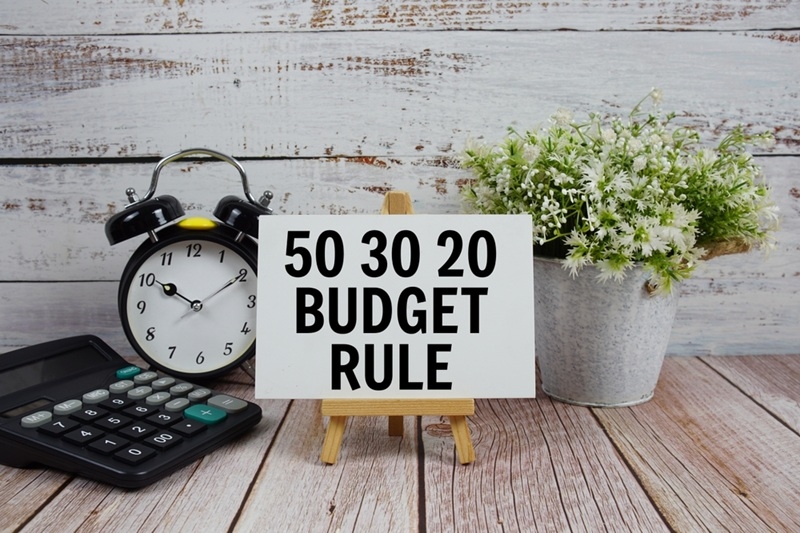
Payday comes around, money hits your account, and somehow by the end of the month, there is barely anything left. Sound familiar? The average American saves less than 5% of their income, and total household debt across the country has hit a record $18.8 trillion. Credit card balances alone crossed $1.3 trillion. Here is the thing, though: you do not need a financial advisor or a complicated tracking system to turn things around. The 50/30/20 budget rule is a straightforward, three-category system that helps you take charge of your money without overcomplicating the process. Think of this guide as the 50/30/20 budget rule explained in plain language, so you can understand each category clearly and start applying it to your own finances this week.
Read on to understand what is the 50/30/20 budget rule, what each category actually covers, and how to get started today.
Back in 2005, Harvard bankruptcy law professor Elizabeth Warren and her daughter Amelia Warren Tyagi wrote a book called All Your Worth: The Ultimate Lifetime Money Plan. In it, they laid out a spending framework built around three simple percentages. The idea was that most people do not fail at budgeting because they lack discipline. They fail because the system they are trying to follow is too complicated to stick with long-term.
Two decades later, the 50/30/20 budget rule is still one of the most recommended personal finance tools out there, and for good reason. Three buckets, three numbers, and zero need for a spreadsheet.
Before diving in: every percentage here is based on your after-tax income, meaning what you actually take home after federal and state taxes come out, not your gross salary.
Now that you know where this rule comes from, here is how it actually works in practice. Each of the three categories has a specific purpose, and knowing what belongs where is what makes this system so effective.
Think of this bucket as the bills you simply cannot ignore. Rent, groceries, utilities, health insurance, transportation, minimum loan payments, and childcare all live here. A good way to test whether something qualifies: if skipping it would put your home, health, or job in jeopardy, it is a need.
Wants cover everything that makes life enjoyable, but would not derail you if cut tomorrow. Dinners out, Netflix, gym memberships, vacations, and similar spending all belong here. The tricky part is being honest with yourself. Buying clothes is a need. Reaching for a $180 pair of sneakers when a $45 pair does the same job is a want.
This is the bucket that actually moves your financial situation forward. Your emergency fund, 401(k) or IRA contributions, extra debt payments, and investment accounts all go here. Set this transfer up automatically on payday. Once the money moves before you can see it sitting in your checking account, saving stops feeling like a sacrifice.
Explore More: Master Your Money with This Realistic Monthly Budget Guide
There is a gap between understanding a budgeting method and actually using it. Here is how to use the 50/30/20 rule in a practical way that holds up over time.
Look at one real month before you plan anything. Go through your last 30 days of transactions and tag each one as a need, want, or savings. People are often genuinely surprised by where the money is going. That exercise alone tends to change behavior.
Move savings on payday, not at month's end. Whatever your 20% number works out to, schedule an automatic transfer the day your paycheck lands. Saving what is left over at month's end almost never works. Saving first does.
Revisit the numbers every month. Budgets need maintenance. A raise, a paid-off loan, a new recurring expense, these all shift the math. A quick monthly check keeps things accurate.
Pay down high-interest debt aggressively. Credit card interest compounds fast and quietly. If you are carrying a balance, put the bulk of your 20% toward clearing it. Every dollar you knock off that balance is a guaranteed return on your money.
For most people with a consistent paycheck and mid-range living costs, this simple budgeting strategy is genuinely useful. It removes the decision fatigue of categorizing dozens of individual expenses and keeps savings automatic rather than optional.
That said, it is not a universal fit. In high-cost cities like New York or San Francisco, rent alone can chew past 50% of take-home pay. When that happens, shrink the wants allocation before touching savings. A 50/20/30 temporary split is a better trade-off than a 50/30/10 one.
For anyone buried in high-interest debt, a short-term approach that channels more than 20% toward debt payoff often makes more sense. Getting rid of expensive debt faster ultimately frees up more money for saving later on.
Use the 50/30/20 budget rule as your starting point. Shift the percentages to fit your actual situation, and revisit them as life changes.
Also explore: Saving Money on a Low Income: Budgeting That Works
The 50/30/20 budget rule has held up for twenty years because it fixes the actual reason most budgets fail: they are too detailed and time-consuming to maintain. Three categories that fit every dollar you earn is a system almost anyone can follow without burning out. If you came here looking for the 50/30/20 budget rule explained without the jargon or the financial fluff, this is it: half your take-home for needs, thirty percent for wants, and twenty percent for building the kind of financial cushion that changes how secure you actually feel.
Whether you are chasing an emergency fund, trying to clear credit card debt, or getting serious about retirement for the first time, this simple budgeting strategy gives you a framework that is both realistic and flexible. Pull up last month's spending, run the numbers, and see where things stand. Most people find that one honest look is the only push they need.
Yes, and it fits more naturally than most people expect. Your minimum monthly payment is a fixed obligation, so it goes straight into the needs bucket. Any amount you pay on top of that belongs in the 20% category alongside your other savings. Got a loan with a steep interest rate? Pull back on wants for a few months and throw that extra cash at the balance. You will come out ahead faster than you think.
Start by looking back at your last three to six months of earnings and find the average. That number becomes your working baseline for the three buckets. When a slow month hits, the wants category is the first place to pull back, not savings. On a strong month, resist the urge to lifestyle creep right away. Put that extra money toward your emergency fund or knock down a debt balance before loosening up on spending.
Yes, they do. HSA contributions grow tax-free, carry over from year to year, and can be used for qualified medical expenses at any point. That combination makes an HSA one of the more versatile savings tools available, working alongside a 401(k) or IRA rather than replacing either one.
This content was created by AI